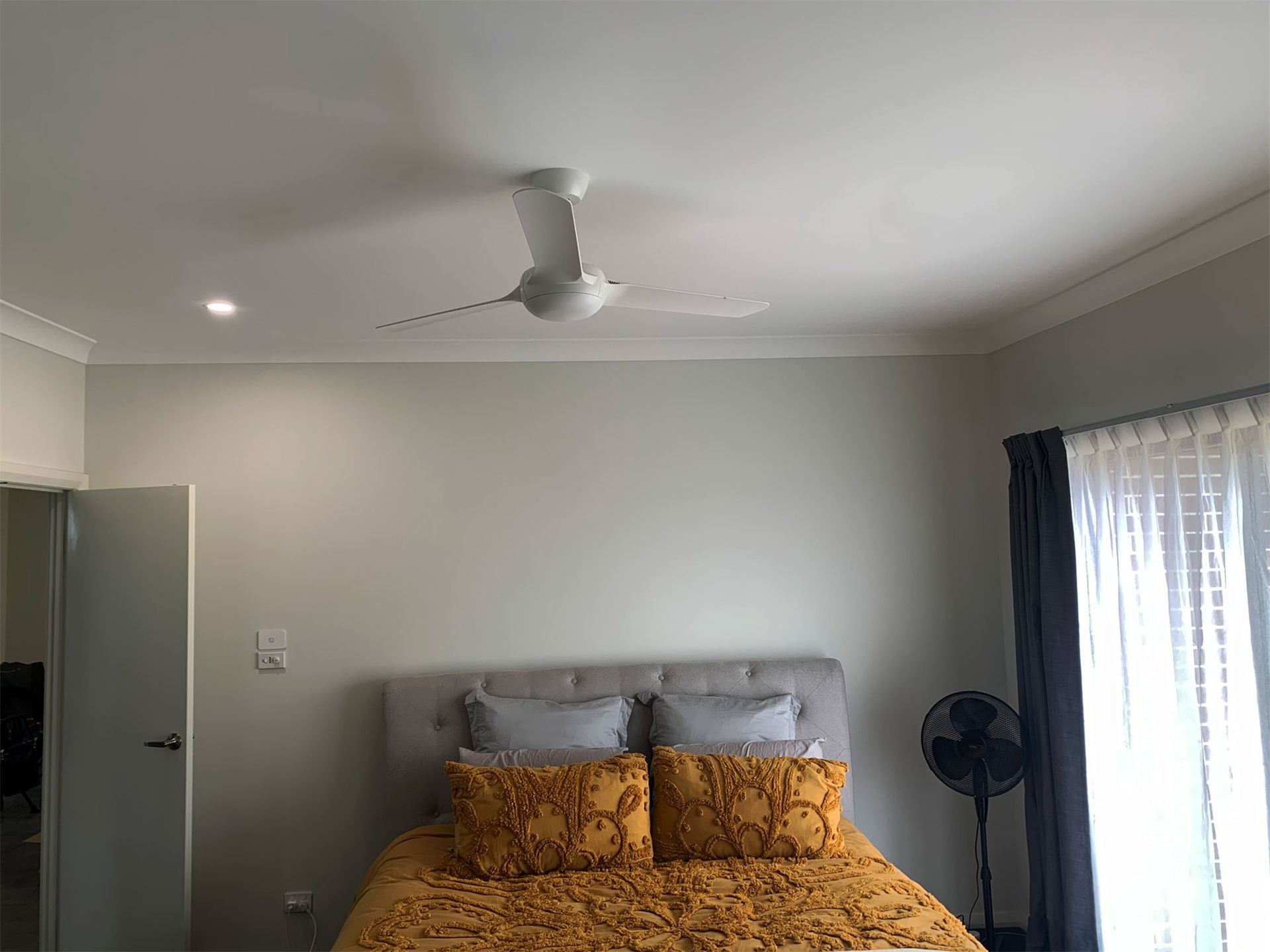
It was the remote
Fresh batteries or a re-pair and it is back. Cost you nothing, and the fan was never the problem.

A hum, a dead remote and a wobble are three different problems with three different answers.
Ceiling fan stopped turning, humming without moving, or the remote has given up? Here is what each symptom means, what you can safely check from the floor, and when it needs an electrician. Newcastle, Lake Macquarie, Maitland and Port Stephens.
5.0 from 205 Google reviews
A fan that hums without turning is drawing power and going nowhere, and the heat has to go somewhere. Leave it off. A fan that has started moving on its mount is worse, because it is hanging over a bed or a lounge. Someone hurt or you can see smoke: call 000. Anything else here: ring us.
It changes the whole answer, and you can tell from how you control it.
So a dead DC fan is often a dead remote, and a humming AC fan is almost always one small part. Neither means the fan is finished.
Only one light switch in the room? That is normal, and it does not mean a new cable has to be run through your wall. Where there is no second switch wire we fit a DC fan with a remote, which runs the fan and the light separately off the one supply.
No ladder. Nothing here needs the fan opened up.
It sounds too simple and it is the single most common fix on a DC fan. A remote fading out gives intermittent behaviour first, so a fan that works sometimes is a classic flat battery rather than a failing fan.
If fresh batteries do nothing, look for a pairing or reset step in the manual. Many fans need the power switched off at the wall for about ten seconds and back on to re-pair.
Even most remote fans still have a wall switch or an isolator that has to be on, often on the same plate as the light switch. If it has been flicked off, the remote will do nothing at all and the fan is perfectly fine.
This is the most useful thing you can tell us on the phone, and it usually names the fault before anyone attends.
Never nudge a blade on a fan that is switched on. If you have already discovered this, switch it off at the wall and leave it.
Open the switchboard door only. Never unscrew a panel, and leave anything labelled Solar or Battery alone. A switch is ON when the lever points up. Fans usually sit on a lighting circuit, so if the room lights work too, the circuit is fine and the fault is at the fan.
If a lever is down, push it firmly up. If it snaps back, leave it off and ring us. Safety switch keeps tripping >
Fresh batteries or a re-pair and it is back. Cost you nothing, and the fan was never the problem.

A failed capacitor on an AC fan. On an older fan it is often worth weighing a repair against a quieter DC replacement.
Ceiling fans >
A mounting problem, not a balance problem. It is hanging over a bed, so it gets fixed properly rather than packed out.
Tell us what is going on. We ring you back, usually the same day.
The motor is trying and failing, and it is heating up while it does. We test it, and tell you honestly whether a repair or a replacement is the better spend on that fan.
The receiver sits up inside the canopy, so replacing it is electrical work. On some fans a new receiver is not available and the fan gets replaced.
Ceiling fan installation >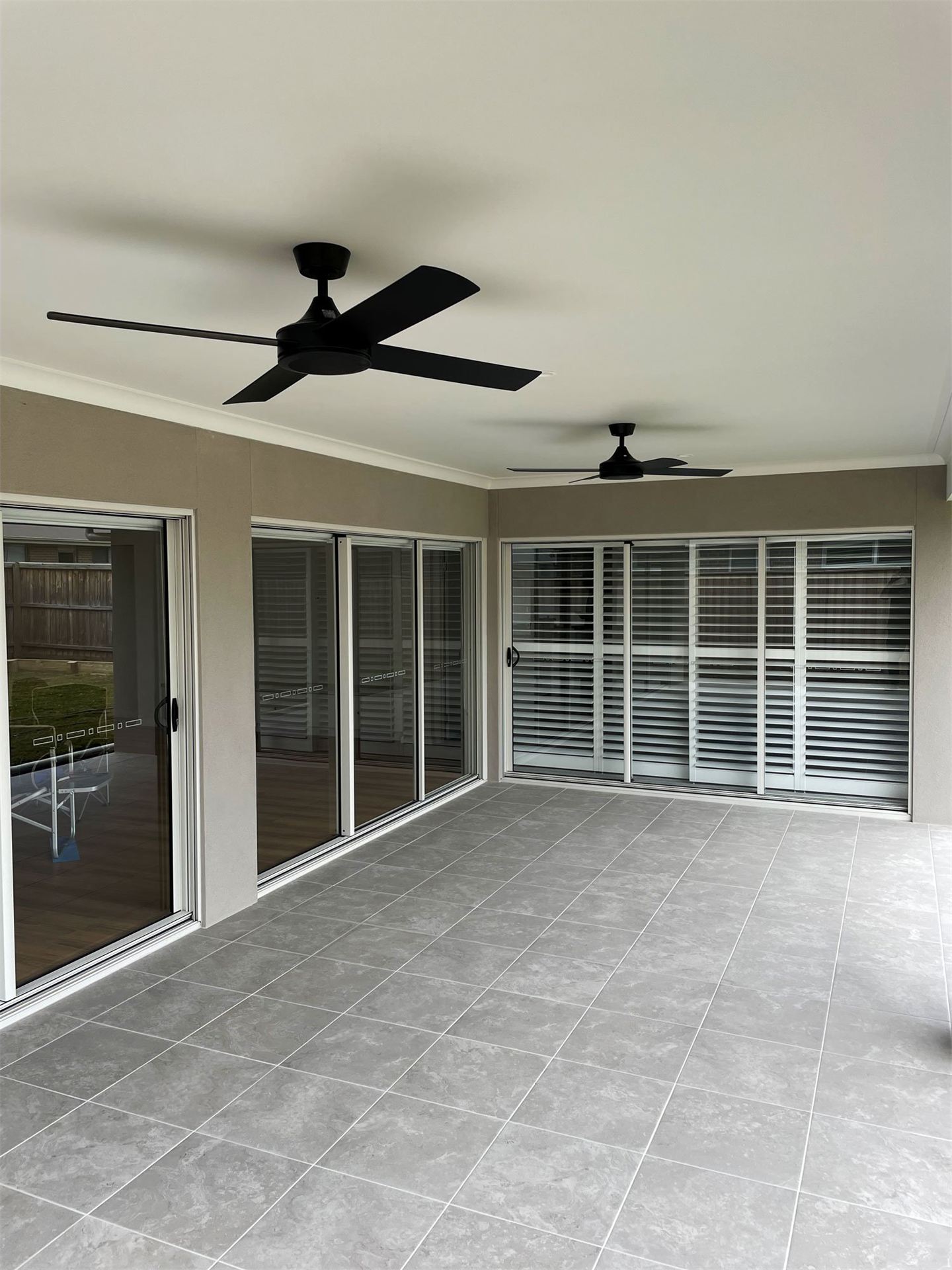
A fan bolted through plasterboard with no proper fixing loosens itself a little more every time it runs. We fix the mounting, not the symptom.
We supply and install, or fit one you have bought. Worth knowing: never pair an AC fan with a DC one in the same house if a remote is involved, and on a rental a remote is one more thing to lose.
Fan replacement >
Renting? Try the batteries first, then tell your property manager what the fan does when you switch it on. Humming, silent or wobbling are three different repairs and saying which one saves a visit.
Property managers: tell us whether it is remote or wall controlled and we bring the right parts. On a rental we usually recommend a wall-controlled fan where the wiring allows it, because a remote is one more thing to go missing between tenants. Property maintenance >
Repair, replace, or a fan where there has never been one.
Read more >No power to the fan, or a circuit that keeps tripping.
Read more >The fan light is out but the fan still turns.
Read more >Light the room properly while we are up there.
Read more >The fan and the light are separate inside the fitting, so one can fail while the other is fine. On a remote fan it is usually the receiver or the remote, and on an older fan it is often the capacitor.
Almost always a failed capacitor, which is the part that gets the motor started. The hum is the motor trying and failing. Switch it off, because leaving it humming can cook the motor.
Probably not. Try fresh batteries first. Most DC fans have no wall control at all, so when the remote or its receiver fails the fan looks completely dead when it is not.
Usually the mounting rather than the blades. A fan bolted to a plasterboard ceiling without a proper fixing will always wobble, and it gets worse. It is worth fixing rather than living with.
Yes. Where there is only one switch wire we fit a DC fan with a remote, which controls the fan and the light separately without running a new cable through the wall.
No. In NSW, connecting or removing a ceiling fan is licensed electrical work. It is also hung overhead, so the fixing matters as much as the wiring.
Tell us whether it is remote or wall controlled, and what it does when you turn it on. We will ring you back, usually the same day.
In a hurry? Ring 0400 232 172, any hour, and a person answers.