It was the globe
Done, and it cost you a globe. If the same fitting keeps eating globes, that is worth a look.

One light, one room or the whole house. Each one points somewhere different.
Lights out, flickering or buzzing? Here is how to tell a dead globe from a dead fitting, why a new globe will not fix most downlights, and the one kind of flicker that means stop and ring someone. Newcastle, Lake Macquarie, Maitland and Port Stephens.
5.0 from 205 Google reviews
Lights across the whole house behaving strangely together can be a loose neutral, which is a supply fault rather than a globe. It can damage appliances and it is a fire risk. Turn the lights off, call Ausgrid on 13 13 88 (Essential Energy 13 20 80 in some rural areas), and ring us. Someone hurt or you can see smoke: call 000.
Neighbours dim or flickering too? That is the network, not your wiring. Ring Ausgrid on 13 13 88 first.
Before anything else, walk the house and count. It takes two minutes and it decides everything that follows.
If the lights are out but the power points still work, the two are on separate circuits and only the lighting one has gone. That is normal and it is useful to be able to tell us.
Feet on the floor. None of these needs a ladder or a screwdriver.
Only if you can reach it safely from the floor or a stable step, and only on a fitting with a changeable globe. Switch it off first and let it cool. If a known-good globe works, you are done.
If it is an LED downlight, this probably does not apply. See the next step before you buy anything.
Nearly all modern LED downlights are one sealed unit. The light itself rarely fails. What fails is the driver, a small box sitting above the ceiling that feeds it. You cannot see it, you cannot buy a globe for it, and no amount of globe swapping will bring the light back.
The giveaway: the light worked normally, then stopped dead, or it flickers and then drops out after a few minutes as it warms up. Replacing the fitting is the fix, and it is a quick job.
Two or three downlights out in the same room? Drivers bought at the same time tend to fail around the same time. It is usually worth doing the room rather than one at a time, and it costs less than three separate visits.
Open the switchboard door only. Never unscrew a panel, and leave anything labelled Solar or Battery alone. A switch is ON when the lever points up, and lighting circuits are often labelled Lights.
If a lever is down, push it firmly up. If it stays up, try the lights again. If it snaps back down, something on that circuit is faulty, so leave it off and ring us. If it has a Test button it is a safety switch. Safety switch keeps tripping >
The meter board is on an outside wall on most homes. Where it is not, the switchboard is usually in the garage or a cupboard.
This one catches a lot of people after they change halogens to LEDs. An old dimmer was built for a globe drawing ten times the power. An LED does not give it enough to work with, so you get flicker, buzz, a narrow dimming range, or lights that glow faintly when switched off.
Nothing is broken and nothing is dangerous. It needs a dimmer made for LEDs, matched to the fittings, which is a small job.
Worth ten seconds before you book anyone:
Done, and it cost you a globe. If the same fitting keeps eating globes, that is worth a look.
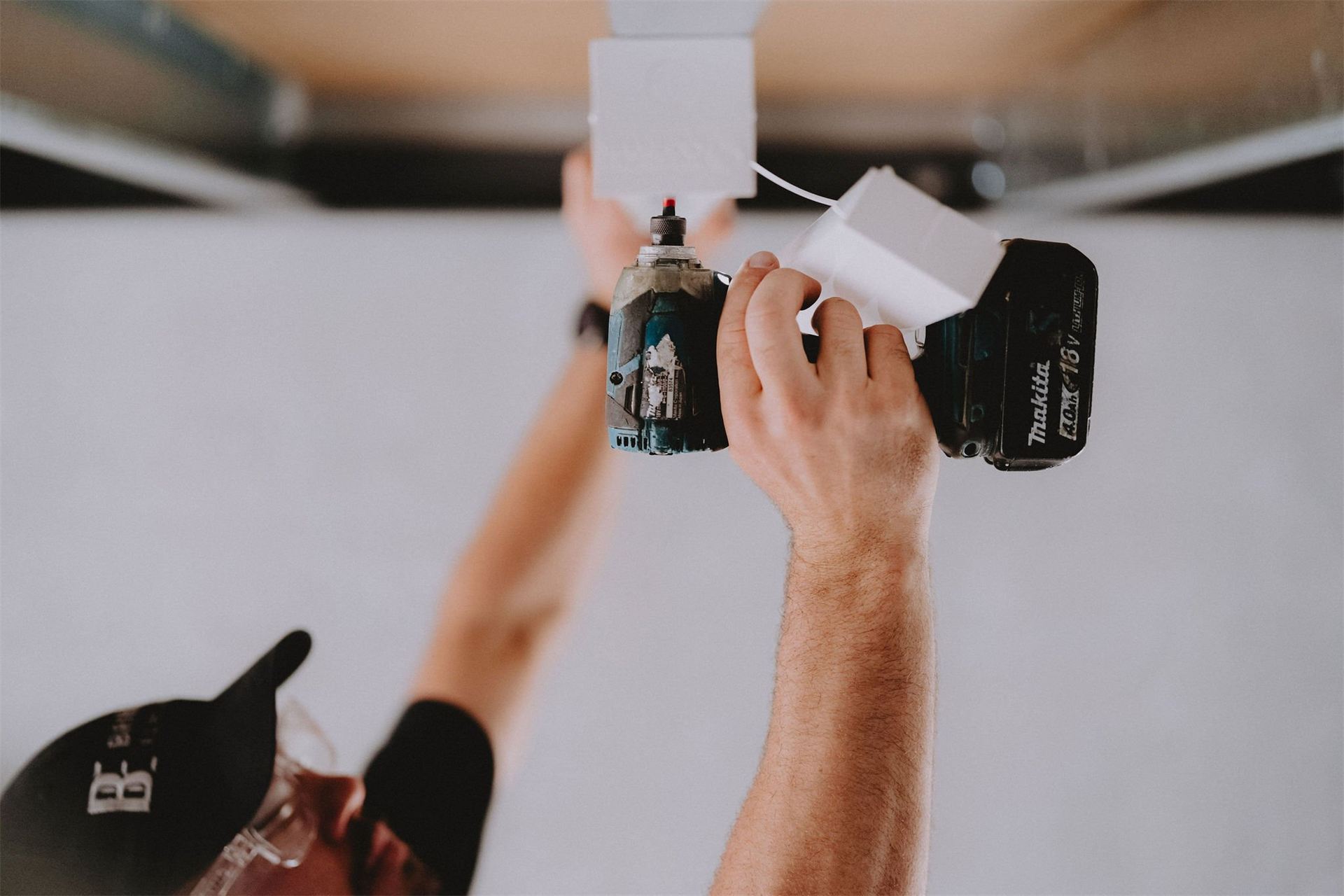
No globe to change. The driver above the ceiling has gone and the fitting gets replaced.
Lighting and downlights >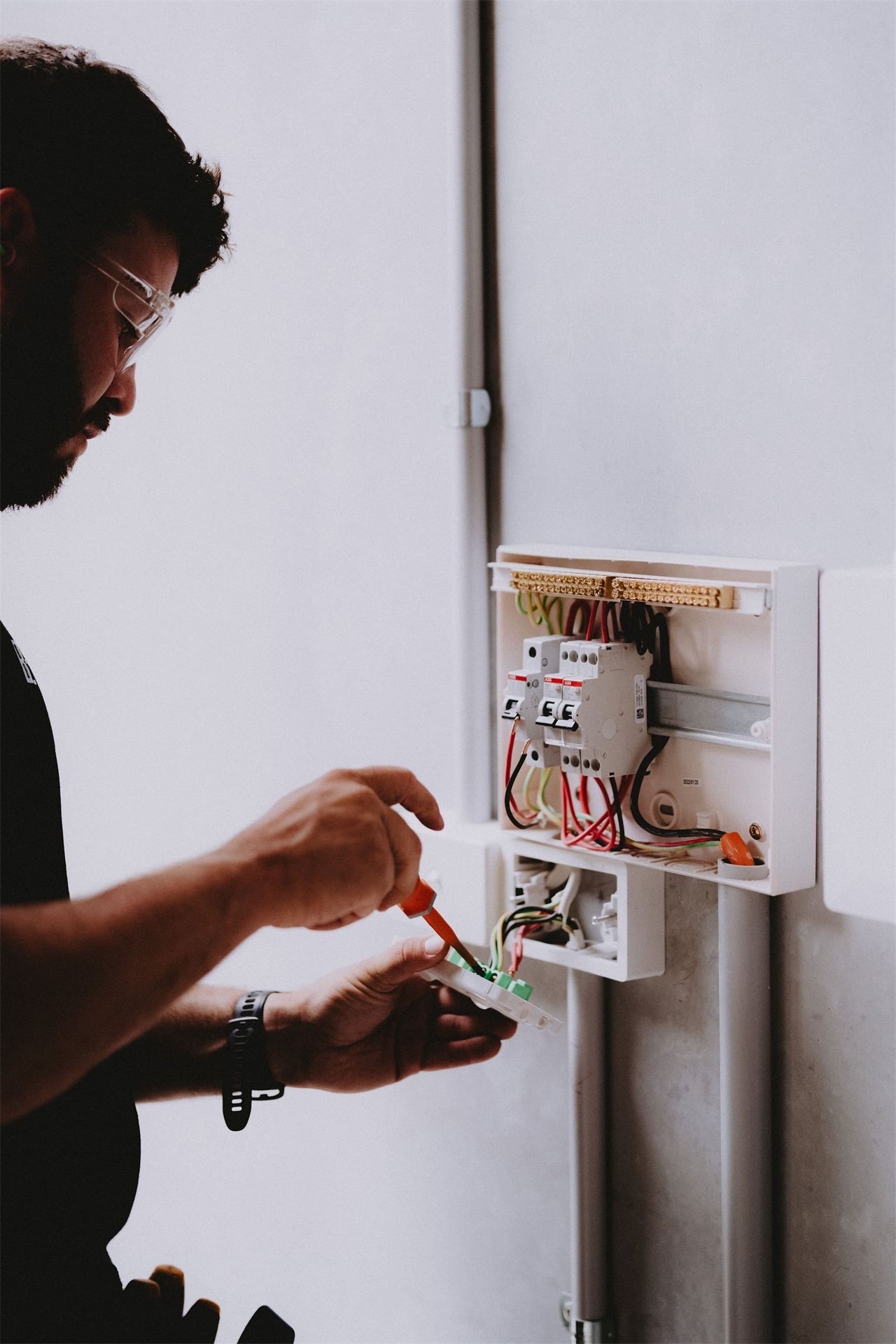
A whole room or run of rooms. We test the circuit and find the fault rather than guessing at fittings.
Fault finding >Tell us what is going on. We ring you back, usually the same day.
Not a globe. This can be a loose neutral, which damages appliances and starts fires. Ring the network first, then us. It is not something to wait on.
Emergency help >
That is a loose connection making heat, and it is the stage before it starts arcing. Turn the circuit off and ring us the same day.
Classic failing driver, and often a batch that all went in on the same day. We check the rest rather than come back three times.
Old halogen downlights run hot and were often packed straight against insulation. If the plasterboard around one is brown, get it looked at.
LED upgrades >
Renting? Tell your property manager how many lights are out and whether they are downlights, because that decides whether it is a globe or a fitting. If anything smells hot or looks brown, say that first.
Property managers: tell us the count and the type and we bring the right fittings the first time rather than attending twice. We work for several Hunter agencies and invoice the same day with before and after photos. Property maintenance >
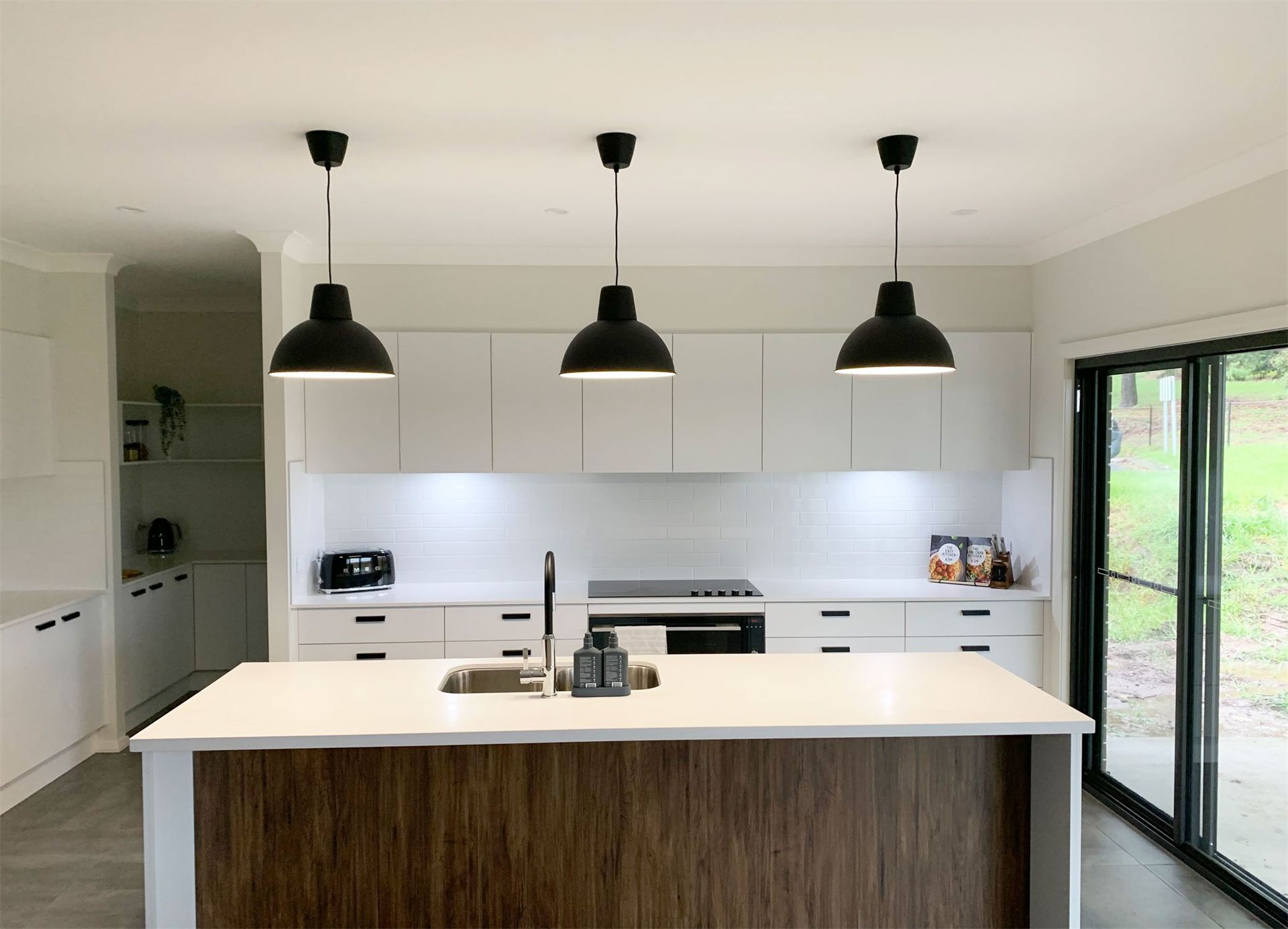
Replace a failed fitting, or light a room properly.
Read more >Old halogens out, cooler and cheaper LEDs in.
Read more >A whole circuit out, or lights that keep failing.
Read more >The switch with a Test button will not stay on.
Read more >Usually the globe, or on LED downlights the driver behind the ceiling. If a new globe does not fix it, the fitting or its connection has failed and it needs an electrician.
Most LED downlights are a sealed unit with no changeable globe, and the part that fails is the driver sitting above the ceiling. The fix is a new fitting, not a new globe.
That is a circuit, not a fitting. Check the switchboard for a switch that is down. If nothing is down, or it will not stay up, the circuit needs testing.
One light flickering is usually a loose connection or a failing LED driver. If lights all over the house flicker or change brightness together, stop and ring us, because that can be a loose neutral.
The dimmer is almost certainly an old one made for halogen globes. LEDs draw far less power and need a dimmer made for them. Swapping the dimmer usually fixes it.
Yes. A warm switch means a loose connection making heat. Stop using it, turn that circuit off at the board and ring us.
Tell us how many lights are out and whether they are downlights. We will ring you back, usually the same day.
In a hurry? Ring 0400 232 172, any hour, and a person answers.