
It hums but will not turn
A failed capacitor on an older fan. The motor is trying and heating up while it does. Switch it off.
What to check >
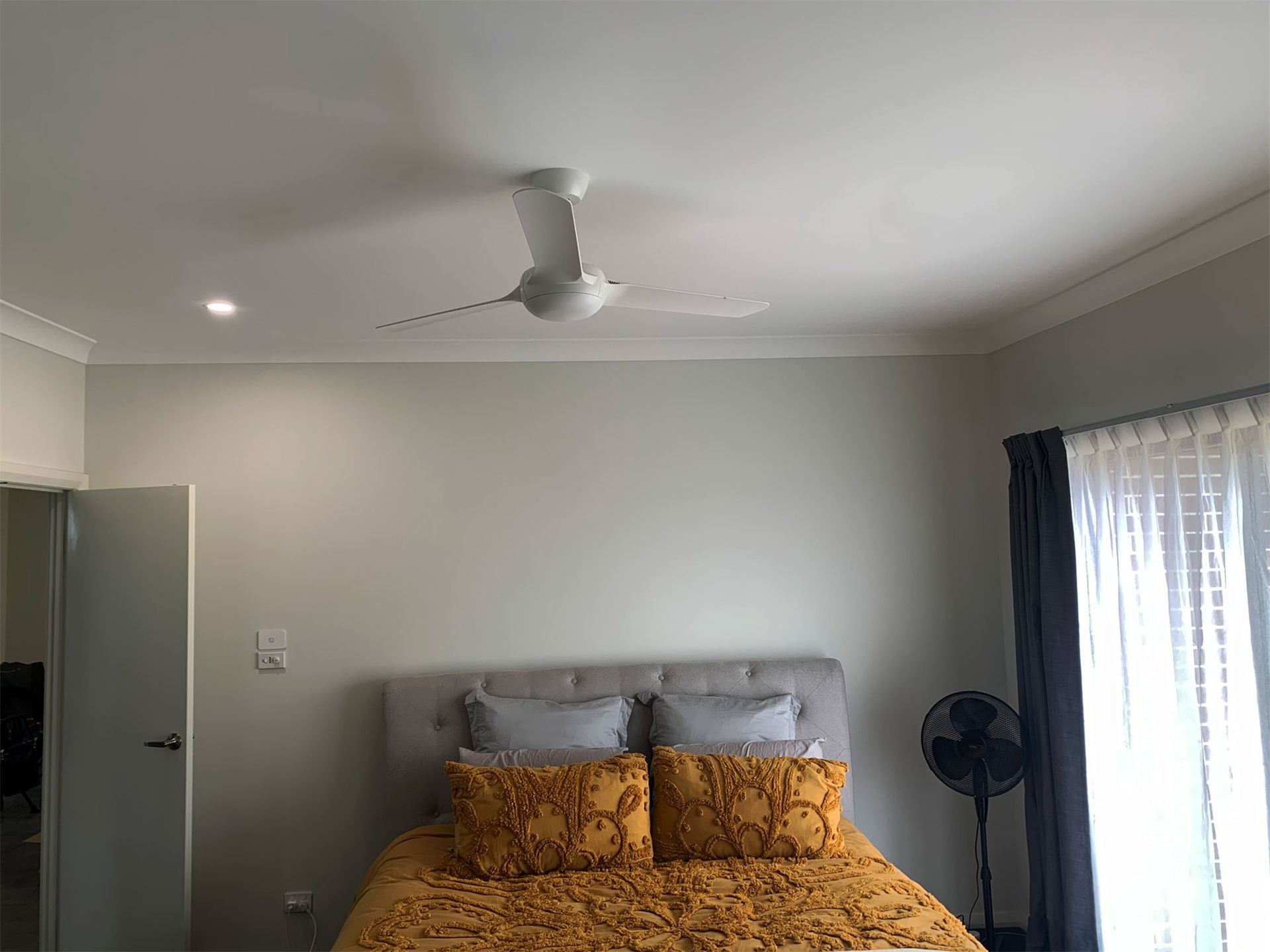
Ignore clockwise and anticlockwise. Stand under it and see what you feel.
Summer is coming and the fan has sat all winter. Here is how to tell which way yours is turning, how to switch it over, and what to do if it does nothing at all. Newcastle, Lake Macquarie, Maitland and Port Stephens.
5.0 from 205 Google reviews
Run the fan on its highest speed and stand directly underneath.
That is the whole answer. Everything below is detail.
Why we will not tell you "clockwise". Which direction pushes air down depends on the angle of the blades, and fans are not all built the same way. Half the advice online gets this wrong for half the fans. Your face is a better guide than a rule.
Summer: the fan blows down. It is not cooling the room. A ceiling fan does nothing to the temperature on the wall thermometer. What it does is move air across your skin, and moving air carries heat away from you far faster than still air. You feel several degrees cooler while the room is exactly as warm as it was.
Which is also why there is no point running a fan in an empty room. With nobody in it, it is a motor making heat for no reason.
Winter: the fan pulls up. Warm air rises and sits against the ceiling, doing nobody any good. Run slowly in reverse, the fan draws that air upwards and pushes it out and down the walls, so it comes back into the room at the edges rather than falling on your head as a draught.
Be honest about winter mode: it earns its keep in a room with a high, raked or cathedral ceiling, where there is a real pool of warm air out of reach. In a room with an ordinary flat ceiling the difference is small. It costs nothing to try for an evening.
Two minutes, and nothing here needs a ladder.
Completely stopped, not still drifting round. A reverse switch flicked while the motor is turning can damage it, and on an older fan that is a repair rather than a setting.
If the slider is on the fan body and you cannot reach it safely from a stable step, leave it. It is not worth a fall to change a setting.
Set it back to its highest speed and stand underneath. If you now feel the breeze, you are in summer mode and you are done.
Some remote fans need the power off at the wall for about ten seconds and back on before the change takes.
First run of the season is the best time to notice a problem, and it is why we get busy in October.
It is the most common thing we are called out for as the weather turns:
A failed capacitor on an older fan. The motor is trying and heating up while it does. Switch it off.
What to check >Try fresh batteries first. On a fan with no wall control, a dead remote makes a perfectly good fan look finished.
If the room has never had one, the first hot week is when that gets noticed. We can usually fit one on the existing light point.
Ceiling fan installation >Tell us what is going on. We ring you back, usually the same day.
If the room has only one light switch, that does not stop you having a fan with a light. We fit a DC fan with a remote, which runs both off the one supply. No new cable through the wall.
Ceiling fans >
A ceiling fan draws a tiny fraction of what an air conditioner does. In a bedroom it is often all you need for the shoulder months, and it takes the load off the air conditioner in January.
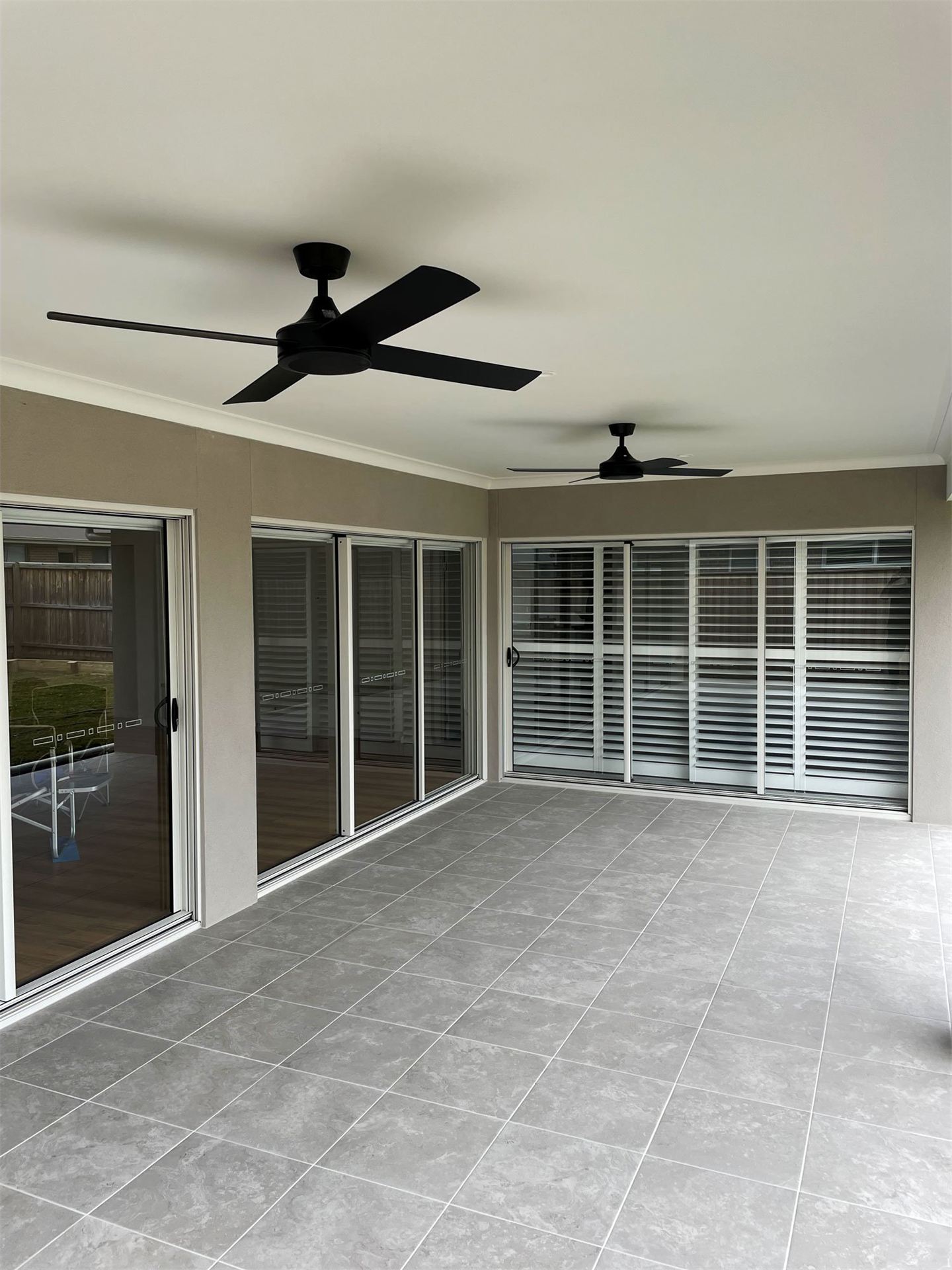
A fan on a patio or an alfresco has to be rated for it. An indoor fan put outside rusts at the bearings and the blades drop, which we see every year.
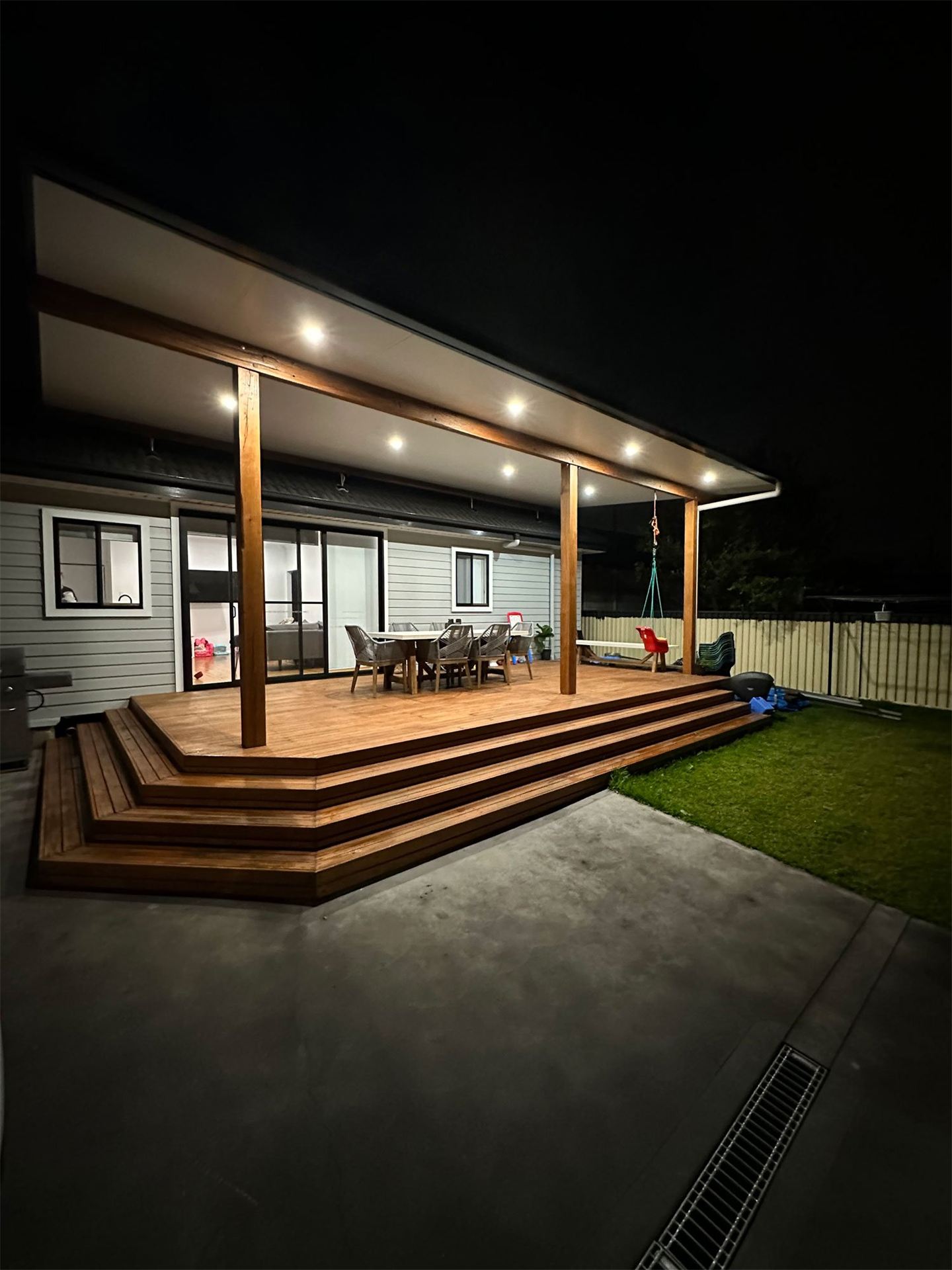
Renting? Changing the direction is yours to do. If the fan hums, wobbles or will not start, that is a repair and it goes to your property manager.
Property managers: the first hot week brings a run of fan calls every year. Tell us whether it is remote or wall controlled and we bring the right parts. On a rental we usually suggest a wall-controlled fan where the wiring allows it, because a remote is one more thing to go missing between tenants. Property maintenance >
A hum, a dead remote and a wobble mean three different things.
Read more >A new fan, or a fan where there has never been one.
Read more >Or running, and still leaving the room steamy.
Read more >Light the room properly while we are up there.
Read more >So that it blows air straight down at you. Stand underneath and you should feel a clear breeze on your face. That is summer mode, and the moving air makes the room feel cooler than it is.
The other way, so it draws air up instead of down. You should feel almost nothing standing under it. It pushes the warm air collected at the ceiling gently down the walls without putting a draught on anyone.
It depends on the fan, which is why that answer is unreliable. Which rotation pushes air down is set by the angle of the blades, and plenty of fans are built the other way round. Feel for the breeze instead of watching the blades.
On an older fan it is a small slider on the body of the fan, above the blades. On a remote or app controlled fan it is a button on the remote, often marked with a curved arrow. Some fans have no reverse at all.
It can, in a room with a high or raked ceiling where the warm air collects out of reach. In a room with a normal flat ceiling the difference is small. It costs very little to try for an evening and see.
No. Plenty of fans, including some good ones, only turn one way. It is a feature the maker chose to leave out rather than a fault.
Yes. Switch it off and wait until the blades have completely stopped before touching a slider on the fan body. A reverse switch flicked while the motor is turning can damage it.
Tell us what it does when you switch it on. We will ring you back, usually the same day.
In a hurry? Ring 0400 232 172, any hour, and a person answers.