It was the appliance
It failed in a second power point too. That is a repairer, the shop or the maker's warranty, not an electrician.

Four safe checks, in order. Most dead power points come down to one of them.
One power point dead, or half the house gone quiet? Here are the checks you can safely do yourself, the warning signs that mean stop, and when to call an electrician in Newcastle, Lake Macquarie, Maitland or Port Stephens.
5.0 from 205 Google reviews
All of those mean a loose connection, and a loose connection makes heat. It is one of the more common ways a house fire starts. Stop using that point, switch that circuit off at the switchboard if you can do it safely, and ring us. Someone hurt or you can see smoke: call 000.
Never take the faceplate off. In NSW, removing a power point or touching the wiring behind it is licensed electrical work. It is also where the live parts are. Changing a plug top or a globe is fine. Anything behind the wall is not.
Power points are not wired one by one back to the switchboard. They run in a chain, one to the next, all the way around a circuit. That single fact explains most of what you are seeing.
If the connection inside one power point works loose, everything after it in the chain goes dead too. So one bad point can kill four rooms, and the dead ones are often nowhere near the faulty one. It also means the point that is still working can be the one at fault.
The usual causes, in the order we find them:
Four checks, in this order. None of them needs a tool and none needs the faceplate off.
Use something you know works, like a phone charger or a lamp. If that works, the power point is fine and the first appliance is the problem.
Then do the reverse: plug the original appliance into a point you know is live. If it fails there too, it is the appliance, and that is a repairer or a warranty claim rather than an electrician.
Walk the house and try a few points in each room. You are working out whether it is one point, one room, or a whole run of the house. Take note as you go, because it is the single most useful thing you can tell us on the phone.
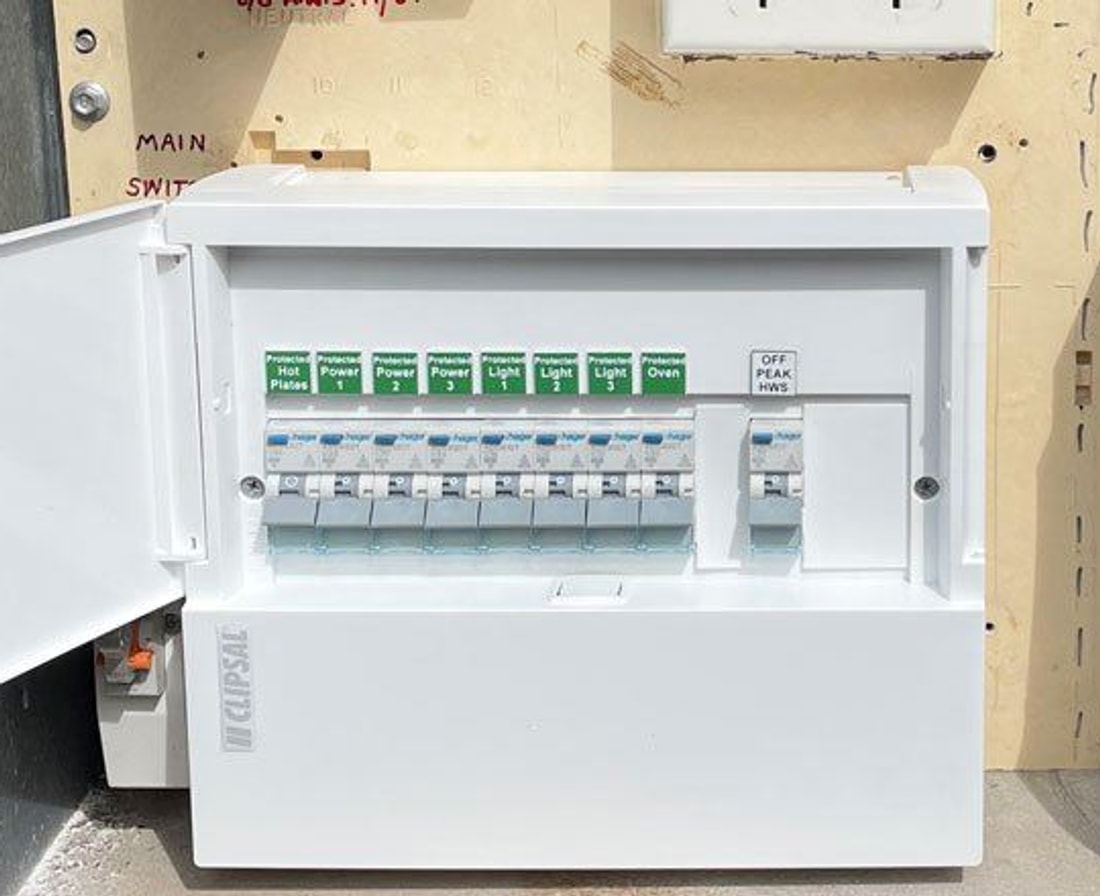
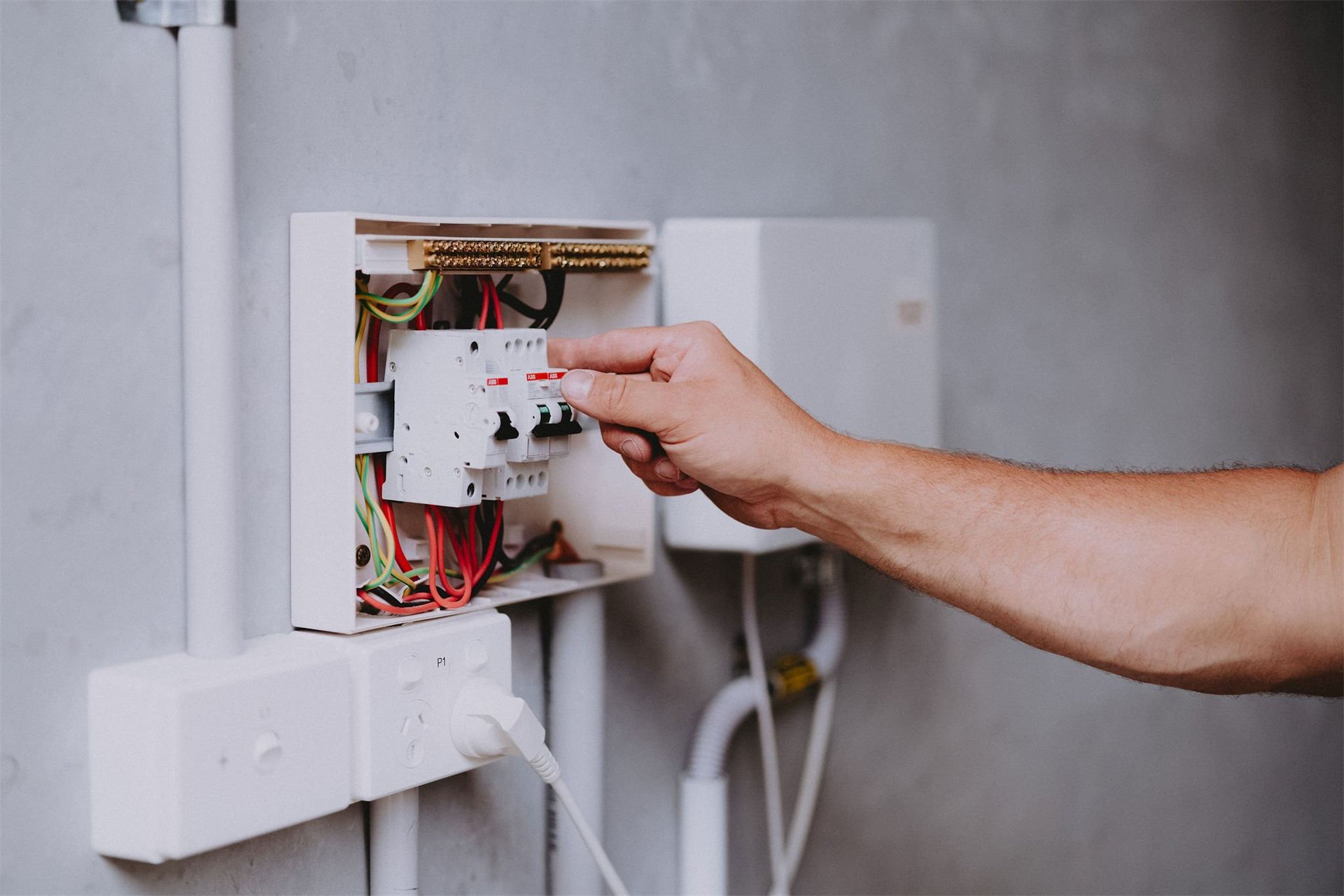
Open the switchboard door only. Never unscrew a panel, and leave anything labelled Solar or Battery alone. A switch is ON when the lever points up.
Look for one lever sitting down while the rest point up. If you find one, push it firmly up. If it stays up, you are done. If it snaps straight back down, the fault is still connected and it needs testing, so leave it off and ring us.
If the switch that went off has a Test button on it, that is a safety switch rather than a plain breaker, and the safety switch guide walks through finding what tripped it. Safety switch keeps tripping >
Some power points are switched from the wall, especially in bedrooms and lounges, and the switch is often by the door in a bank with the light switches. If one has been flicked off, the point is dead and there is nothing wrong with it.
The same goes for the points people forget are switched at all. Worth a look before you book anyone:
It failed in a second power point too. That is a repairer, the shop or the maker's warranty, not an electrician.
The switch stayed up and everything came back. Worth knowing why it went off, especially if it happens again.
Why it trips >
Dead with the breaker on, or a whole run gone quiet. We find the loose connection and repair it.
Fault finding >Tell us what is going on. We ring you back, usually the same day.
That is a loose connection arcing behind the faceplate. Stop using it and ring us the same day, because this is the one that starts fires.
One loose connection takes out everything after it in the chain. We test the circuit and find it rather than replacing points one at a time and hoping.
Intermittent is worse than dead, not better. It means loose rather than broken, which is the stage before it starts arcing. Get it looked at.
Worn contacts lose their grip, and a loose grip makes heat. Replacing a tired point is quick and it is the cheap end of this problem.
Power point installation >Renting? Tell your property manager before anyone is booked, because they organise repairs at the property. If you can smell burning or see a scorch mark, say that first. It changes how quickly it gets treated.
Property managers: tell us which points are dead and whether there is any mark or smell, and we will bring the right parts the first time. We work for several Hunter agencies and invoice the same day with before and after photos. Property maintenance >
Dead power points, tripping circuits, flickering lights.
Read more >Replace a worn point, or add one where you actually need it.
Read more >The switch with a Test button will not stay on.
Read more >Burning smell, sparks or heat. Ring now, any hour.
Read more >Usually a tripped breaker, a worn or loose connection inside the point, or a fault further back on the same circuit. Power points are wired in a chain, so a fault in one can kill the ones after it.
They are almost certainly on the same circuit. Check your switchboard for a switch that is down. If nothing is down, or it will not stay up, the circuit needs testing.
Yes. Heat, buzzing, crackling or a brown mark means a loose connection, which is a common cause of house fires. Stop using it, switch that circuit off at the board and ring an electrician.
No. In NSW only a licensed electrician may remove a power point or work on the wiring behind it. Changing a plug top or a globe is fine, anything behind the wall is not.
The metal contacts inside have lost their grip, usually through age or heat. A loose grip makes heat, and heat makes it worse, so it is worth replacing rather than living with.
An intermittent fault, and it is the one worth acting on quickly. It nearly always means a connection that is loose rather than broken, which is the stage before it starts arcing.
Tell us which points are dead and what you have already tried. We will ring you back, usually the same day.
In a hurry? Ring 0400 232 172, any hour, and a person answers.