It is an overload
Too much on one old circuit. The answer is a circuit that can carry it, not a heavier fuse.
Add a circuit >
The fuse is doing its job. The question is what keeps asking it to.
Ceramic fuse blowing again, or blowing the moment you put a new wire in? Here is what a fuse actually protects, why heavier wire is the one fix that makes things worse, and the gap most homes with these boards still have. Newcastle, Lake Macquarie, Maitland and Port Stephens.
5.0 from 205 Google reviews
A fuse that blows instantly is not an overload, it is a short, and something on that circuit is faulty right now. Leave the circuit off. Someone hurt or you can see smoke: call 000. Anything else here: ring us, including after hours.
Not you. Not your appliances. The cable inside your walls.
The thin wire in a ceramic fuse is chosen to melt before the cable behind the plaster gets hot enough to be a problem. That is the whole design. It is a deliberate weak point, put somewhere safe, so the weak point is never inside your ceiling.
Which is why the common fix is the dangerous one. Put a heavier wire in and the fuse stops being the weak point, and the cable in the wall becomes it instead. The blowing stops, everything seems fine, and the protection has been removed from a circuit that was already telling you something was wrong. We still find this in Hunter homes, usually done years ago with the best of intentions.
And here is the bigger one. A fuse does not protect a person. It cannot tell the difference between a kettle and someone touching a live wire, because both look like normal current to it. Only a safety switch, an RCD, does that, and it does it in about thirty milliseconds. If your board has only ceramic fuses, you almost certainly have none, anywhere in the house.
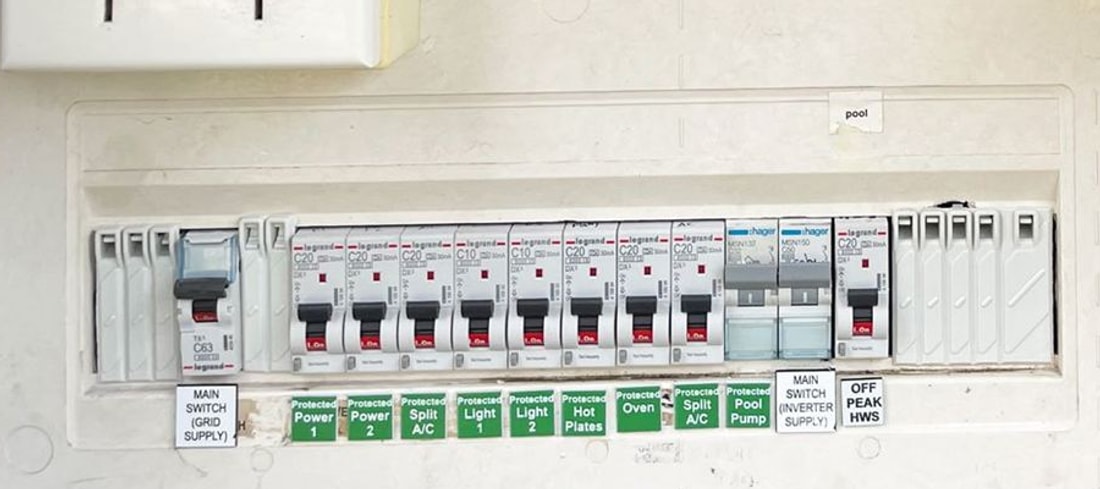
A modern board for comparison. The switches with a T or Test button are the safety switches. An older fuse board has nothing of the sort.
Nothing here needs the board opened or a fuse rewired.
When it goes, note which lights and power points die with it. That set is the circuit, and the cause is somewhere in it. Write it down, because it is the most useful thing you can hand us.
An overload is the innocent explanation, and it usually has a pattern. Old homes were wired for a fraction of what we plug in now, so one circuit can be carrying most of a kitchen.
The usual heavy loads, and they are often on a circuit never meant for them:
If you can safely restore the circuit, unplug the heavy items and see whether it holds. If it holds with less load, it is an overload and the answer is another circuit rather than a bigger fuse. If it blows regardless, leave it off.
Open the board door only. Never unscrew a panel and never pull a carrier apart. You are just looking.
Ceramic carriers you pull out by hand, with no Test button anywhere on the board, means no safety switch protection on anything. That is worth knowing even if the blown fuse turns out to be nothing.
Too much on one old circuit. The answer is a circuit that can carry it, not a heavier fuse.
Add a circuit >
It blows instantly however many times you rewire it. We test the circuit and find what has broken down.
Fault finding >The blown fuse is the small problem. Nothing in the house is protecting a person, and that is the one worth fixing.
Safety switches >Tell us what is going on. We ring you back, usually the same day.
That is a short circuit, not too many things plugged in. Rewiring it again just melts another wire. We test the circuit and find the fault.
We see it, usually done years ago to stop the nuisance. The circuit has been running unprotected ever since. Worth putting right whether or not it has blown recently.
A new circuit for a kitchen, an air conditioner or a shed needs somewhere to go. On a full ceramic board that means dealing with the board first, so it is worth knowing before you plan the rest.
Switchboard upgrades >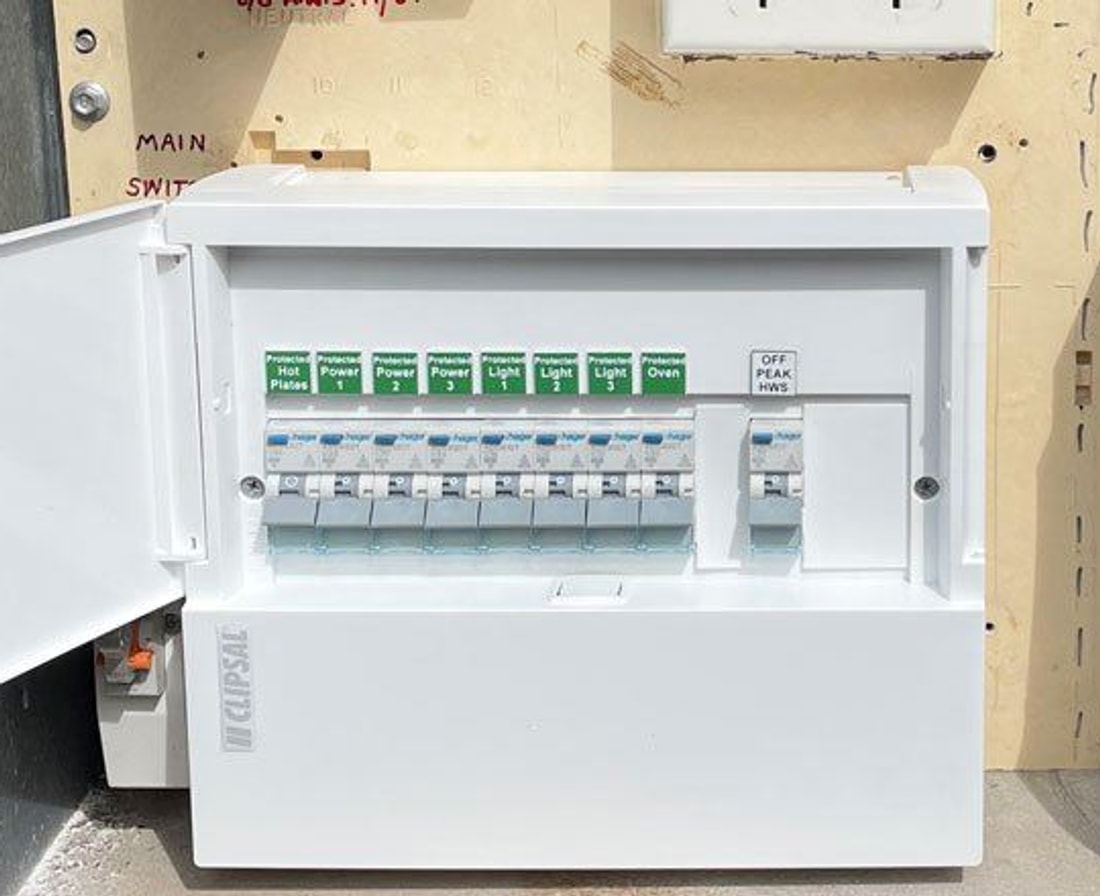
A ceramic board usually means the wiring is of an age too. A safety inspection tells you what you have actually bought before something tells you the hard way.
Safety inspection >
Renting? Do not rewire a fuse yourself, even if you know how. Report it to your property manager, and mention if it has happened before, because a repeat is a different conversation from a one-off.
Property managers: a repeat blown fuse at the same property is usually a sign the board is the issue rather than the tenant. We report what we find with photos so an owner can see the case for the board rather than pay for the same call-out every winter. Rental safety switches >
Ceramic fuses out, breakers and safety switches in.
Read more >The protection a fuse was never able to give you.
Read more >We find what keeps blowing it, rather than guess.
Read more >Older home, or one you have just bought.
Read more >A fuse blows because the circuit is drawing more current than it was built for, or because something on it has faulted. Repeatedly blowing means the cause is still there and has not been found.
No, and this is the one that causes real harm. The fuse wire is sized to protect the cable in your walls. Heavier wire lets the cable overheat instead, and the cable is the part you cannot see or replace easily.
No. A fuse protects the wiring from overload. It does not detect electricity flowing through a person. Only a safety switch, an RCD, does that, and homes on ceramic fuses usually have none.
Not because a fuse blew. But a board with only ceramic fuses generally has no safety switch on anything, which is the thing worth changing. It also tends to be full, so adding a circuit means dealing with it anyway.
The fault is still connected. Stop replacing the wire and get the circuit tested. A fuse blowing instantly and repeatedly means a short, not an overload.
No, an existing installation can stay as it is. But new work has to meet current rules, and any electrician looking at your board will point out the missing safety switches, because that is the real gap.
Tell us what is on that circuit and how often it goes. We will ring you back, usually the same day.
In a hurry? Ring 0400 232 172, any hour, and a person answers.